
































Unless you’ve been living under a rock the last week you’ve no doubt read about the death of teenager Thomas Kelly in a senseless attack in Sydney’s King Cross.
A truly tragic event, made all the more tragic as the ‘blame game’ begins, with the New South Wales Government’s crosshairs aimed squarely at small boutique venues across the city.
New South Wales Arts & Hospitality Minister George Souris has come out swinging in the wake of the attack, blaming small bars because they have “a lower level of surveillance, a lower level of supervision, a lower level of compliance”, adding that pokies venues “are better policed, better supervised than those smaller venues”.
While not blaming small venues entirely, Mr Souris said they were to blame “to some extent, that really has been a failure of policy – the proliferation of small licences in the concentrated way that they have occurred,” in particular taking aim at the huge amount of small bars he says have popped up in Kings Cross.
And if you think you’ve read that wrong, you haven’t.
Of course not everyone agrees with the minister, especially John Wardle, the strategist behind the Raise The Bar campaign and the driving force behind some of the biggest reforms to New South Wales liquor laws in the past few years.
“Small bars and restaurants in Sydney and NSW are playing an incredible role in providing jobs and opportunities for musicians since the 2007 liquor laws and the end of PoPE laws in 2009,” Wardle said to Tone Deaf. “From the Moose and Corridor in Newtown, to the Green Room in Enmore – Small Bar itself… the list goes on…”
“These venues have live music and are adding to the diversity of our night economy,” he continued. “As for gaming venues being better run… really? What bullshit. What sort of vision does Barry O’Farrell have for NSW?”
“At the time the liquor laws were debated in the NSW Parliament, the coalition had the opportunity to support proposed amendments to the legislation restricting new bar licenses to a capacity of 120 patrons and did not do so, allowing the governments laws to pass unopposed. This legislation was not opposed by the Liberal/National coalition.”
Regardless, the New South Wales Government now plans to review rules governing the establishment of small bars. Confused yet? We probably should start from the top with the long battle for not just small bars in Sydney, but for the future of the city’s culture.
You see unlike their southern brethren in Melbourne who took to small bar culture in droves, with a glass of chardonnay in one hand and the hipster manifesto in the other, Sydney has long suffered under an archaic and confusing system that up until a few years ago all but prevented small bars from opening.
But why is that a problem? Because small bars can cater to an increasingly fragmented array of niche tastes in music, which allows small bands to cut their teeth before the good stuff rises to the top.
As AC/DC once said, “it’s a long way to the top if you want to rock n roll”, and that way usually begins at small bars in front of your mum and your school mates.
That was unless you lived in Sydney, where live music pubs quickly made way for beer barns with ubiquitous plasma TVs, poker machines, rude bouncers, and violent drunks.
Prior to changes to the Liquor Act in 2007 that nullified laws written 25 years prior, the situation was so bad you couldn’t buy alcohol at a restaurant without buying a meal, and small bars were virtually non-existent due to a system that was more restrictive, expensive and complex than any other system in Australia.
Due to the archaic nature of the laws, small bars did not fit within the rigid licence categories available, or the costs were simply so high they favoured large sporting bars or pokies clubs, out-pricing most entrepreneurs who couldn’t afford the exorbitant costs.
Raise The Bar campaigned the government to alter the liquor act, similar to years later in Victoria where SLAM petitioned the government of that time to remove the association between live music and violence in legislation.
But after years of government paralysis on the issue, Sydney MP and Lord Mayor Clover Moore snuck her own small bars bill into Parliament catching the Government with their pants down and forcing them to filibuster while they frantically worked on their own framework for a new licensing system.
Moore’s proposals took a leaf out of similar reforms in Victoria in the 1980s, reforms that relaxed the previously rigid liquor laws to allow more diverse licensed venues to operate, leading to a surge in small bars in Melbourne which have become a tourist attraction for the city.
According to Professor John Niewenhuysen, who published a research paper on the effects of those changes in Victoria, there was a massive increase in job growth in the entertainment industry as a result of those changes, creating thousands of jobs for Victorians.
Professor Niewenhuysen also noted that although the number of liquor outlets had increased by 96% in Victoria between 1998 and 2006, the proliferation of new licensed venues had not increased per capita consumption of alcohol.
Clover Moore’s suggestions in her bold move in parliament paved the way for things we may take for granted now, and most importantly, she introduced the idea of a new small bars category of licences, limited to venues with 120 patrons or fewer.
However that was only half of the problem. The other problem was the dreaded “social impact assessment”, a requirement for any bar seeking a license, and whose architects probably had everybody’s best interests in mind even if it did become a bloated, nanny-state policy that merely protected large pokies venues at the expense of a vibrant culture.
The required report, loved by the then Labor Government, required a consultant to collection information on the area the proposed bar was located such as number of youths, the indigenous population, people in lower socio-economic groups, and the unemployed.
The idea behind the social impact assessment was to minimise harm to the local community, and although probably well intentioned, had a perverse effect on what type of licensed venues were able to navigate or afford the process.
The assessment was commissioned and paid for by the applicant, adding between $50,000 to $100,000 to the cost of a license and rarely finding any adverse findings – ater all, the consultants are hardly going to go against their own client.
So given the obvious pitfalls of this policy, why keep it in place? Because it protected large, wealthy existing licensed venues against competition from smaller and newer upstarts by creating a greater barrier to entry.
Starting to feel you’re being cheated?
The obvious winner out of all of this is the Australian Hotels Association, who represent most of the big beer barns and pokies venues across the country, whose New South Wales branch between 1998 and 2005 delivered more than $3 million in donations to the government of the time.
“We aren’t barbarians, but we don’t want to sit in a hole and drink chardonnay and read a book,” said president John Thorpe at the time when the small bars idea was first floated. “People can sit down, talk about history, chew the fat and gaze into each others eyes and all this sort of baloney but it’s pie in the sky stuff.”
“That’s not what Sydney wants,” he added as he promised to visit every government minister “to inform them that this doesn’t entice investment into the industry”, and likely remind them of who’s signing those cheques.
Of course it wasn’t that Sydney didn’t want small bars, it was simply that people like Thorpe were working overtime to prevent them from becoming a reality to protect their own monopoly on the market, after all, Thorpe had no doubt been following closely what had happened in Melbourne and New Zealand following similar changes to the law.
Within a year of New Zealand’s deregulation, the police team assigned to deal with problems at big booze barns was shut down, after the crowd moved on to smaller and more niche establishments, a far cry from the estimated $50 million a year in police time New South Wales was paying.
“It’s the big hotels that take up police time,” said Superintendent Frank Hansen, head of the police drug and alcohol co-ordination unit at the time.
But the pressure from the public proved too great and the liquors were relaxed in 2007, along with the scrapping of the social impact assessment for a community impact statement that was not only a hell of a lot simpler, it also cost a bucket less too.
Finally, there was one last major barrier to smaller live music venues standing in the way – the PoPE – no, not that Pope, but a development application that had to be lodged with the local council, to change the use of a premises from just a licensed venue to a place of public entertainment.
Plus the costs were astronomical, starting at $100,000 and above, again making the barrier to entry impossibly high for small venues; and surprise, surprise, wouldn’t you know it, those pokies venues and beer barns that the Hotels Association represent were exempt.
Yes, you’re reading that right. If you wanted to play even an acoustic guitar at a restaurant or read a poem at a small bar, you’d need to shell out hundreds of thousands of dollars for a PoPE. But if you wanted to sit and play hundreds of pokies machines, the law prohibited a council from requiring a PoPE for the activity.
Something was very rotten in the state of New South Wales.
Of course, they hid behind the idea that this is for the safety of patrons at these venues, a tenuous link between live music and violence that was also enshrined in Victorian legislation, up until 20,000 took to the streets for the SLAM Rally, marched on parliament, and demanded the government respect the local live music community.
If it was really about safety, wouldn’t the highly dangerous cocktail of testosterone and alcohol from when pubs show major sporting events also be a concern for the government?
Actually, quite the opposite. Beer barns that are usually required to close by 10pm on Sundays are given extended trading hours for major sporting events, sometimes until 1am, and were of course exempt from the laws that were suffocating live music.
That was until an early Christmas present in 2008 saw the New South Wales Planning Minister instruct councils that they can no longer require development consent for small scale live entertainment in pubs, bars, cafes and restaurants.
Since then, we’ve seen a renaissance for Sydney’s small bar scene and local music community. Restaurants can now do dinner shows, such as those at Notes in Newtown, and a number of new band venues have opened their doors, such as FBI Social, The Standard, and Upstairs @ The Beresford.
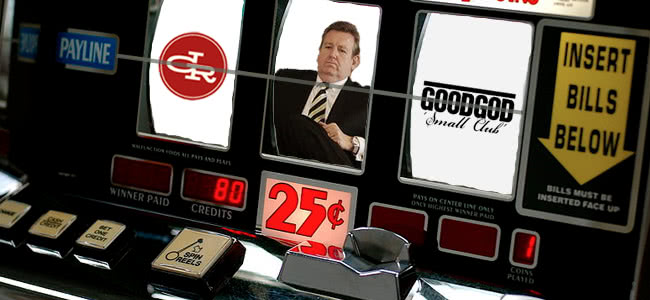
Another popular new live music hang out is Good God, a favourite amongst inner-city music lovers, as well as The Green Room that almost certainly would have been impossible to open under the previous liquor laws and red tape.
Countless solo and acoustic musicians can now be heard in small hole-in-the-wall bars across the City Of Sydney, much to the chagrin of the folks over at the Hotels Association.
But these are still only baby steps. The music community in Sydney is still extremely fragile, as recent issues with The Annandale The Sando will attest to, and it will take a long time before institutions such as Melbourne’s famous Cherry Bar are found in Sydney.
But it won’t be for want of talent. Take a quick look at some of Australia’s best and brightest music stars over the last few years and you’ll see that Sydney more than punches above its weight. Perhaps the adversity the scene has faced has produced some unintended and wonderful consequences?
Names like The Jezabels, Boy & Bear and Bluejuice are becoming household names, and newcomers such as The Rubens, Matt Corby, and Jinja Safari are setting a new standard.
But to continue to produce great Australian musicians, Sydney needs more venues and more opportunities for young and talented artists to showcase their wares, and small niche venues seem like a great place to incubate that talent and the beginning of a new chapter for Sydney’s music community.
Unless of course the current Coalition government in New South Wales undoes years of work, shutting the book on years of progress. But they’re sure have a fight on their hands.
“I think we need to take Minister Souris out one night to see some gigs,” comments John Wardle, who was the driving force behind the removal of PoPE entertainment licenses. “We could start at 505, check out the Mac/Schwartz brewery – we’d have to go to the Sando and the Annandale if the neighbours haven’t shut them down, and why not the Green Room in Enmore.”
“Bugger the pokie rooms for a night out. This guys the Arts Minister too! He should be looking after jobs and opportunities for musicians NOT talking them down and indexing them to a violent murder that had nothing to do with them.”
Although Wardle wouldn’t speculate about the role of the Australian Hotels Lobby in the minister’s attack on small venues he did note that “NSW AHA CEO Paul Nicolaou was chairman of the NSW Liberal Party’s chief fundraising body, the Millennium Forum, for 10 years.”
Greens MP John Kaye is also suspicious of the minister’s motives. “It is hardly surprising that the Coalition is running the big hotels’ line against small bars,” he comments, adding that the big hotels “ not like losing patrons to small bars”.
But is it really that simple? Perhaps. Records show that the Hotels Association donated $472,000 to the Coalition just before donations from the industry became illegal at the end of 2010 as the Labor Government instituted broad changes in the twilight of their government.
Barry O’Farrell, the New South Wales Premier, is also on record in April this year saying he would fight the federal government in court if they tried to impose a nationwide limit on betting for pokies machines, so the stench may in fact reach right to the top.
But this isn’t really debate about pokies machines versus musicians. It’s really a debate about whether the smalls bars and live music venues, made possible from the relaxation of liquor laws, have led to an increase in alcohol-fuelled violence.
That, and the numbers just don’t stack up. In fact, they also show that all of these clusters of small bars that the minister is referring to actually don’t exist, especially in Kings Cross where only five of the 58 small bars in the City of Sydney area were in or near Kings Cross.
“Minister Souris knows that out of the 197 licensed premises in Kings Cross, only three are small bars, of which the total combined capacity is 170 people all closing at midnight,” says NSW Small Bar Association president, Martin O’Sullivan.
O’Sullivan is also pretty blunt in his assessment of the minister’s motives. Indicating that they’re “politicising Thomas Kelly’s death to push what would appear to be his political alliances’ interests.”
“It’s well accepted within the community that small bars have been a catalyst for positive change in NSW. For example there… [has] never been a single small bar on the three strikes disciplinary scheme introduced by the OLGR.”
The woman who made it all happen, Clover Moore, agrees that they’ve been a force for good, pointing out to the NSW Bureau of Crime Statistics and Research that says that violence in licensed venues relates to factors including the quantity and type of alcohol sold, the level of adherence to responsible service of alcohol guidelines, trading hours and patron numbers and demographics.
“This means small bars have a chance at changing behaviour formed in the past by louder, noisier pubs with their more aggressive environment,” argues Moore. “It is much easier for a small bar manager to keep an eye on the amount of alcohol consumed by patrons in a smaller venue than in a large beer barn.”
“The City’s small bar policies have helped build a more civilised drinking culture and encouraged owners and operators to offer more than just alcohol, such as live music and good food”.
“Just forget it,” says John Wardle when asked what the damage could be if the Coalition doesn’t change course. “Leave NSW and go somewhere else … anywhere… if you are a musician, love live music, or want interesting and individual small venues in the towns and suburbs across NSW because it will be back to the sports bars and pokie dens.”
Of course this battle is far from over, but the potential for damage to the Sydney music community could be incalculable; and when you’re dealing with compromised and unprincipled individuals willing to exploit the tragic death of a young man, anything is on the cards.